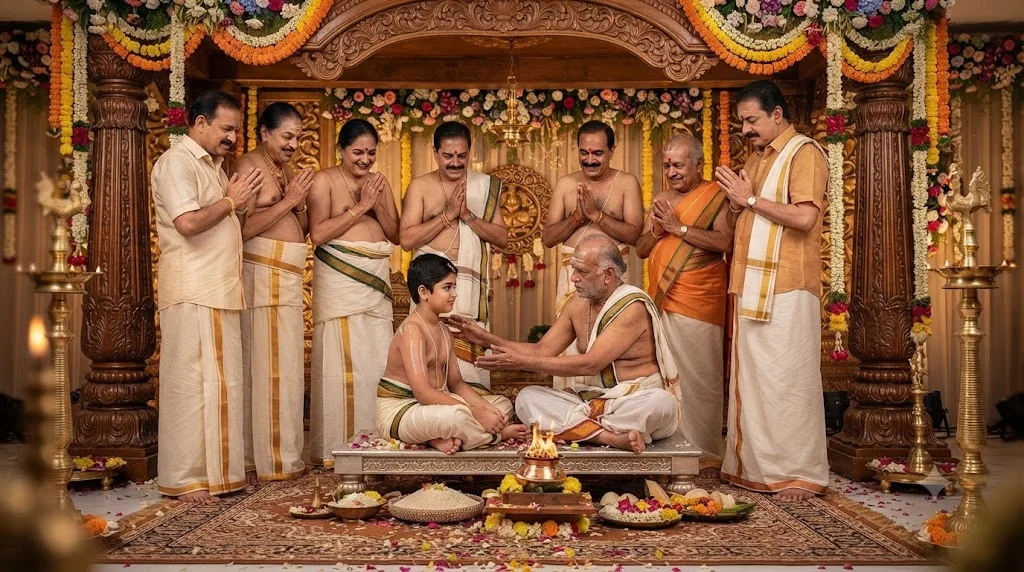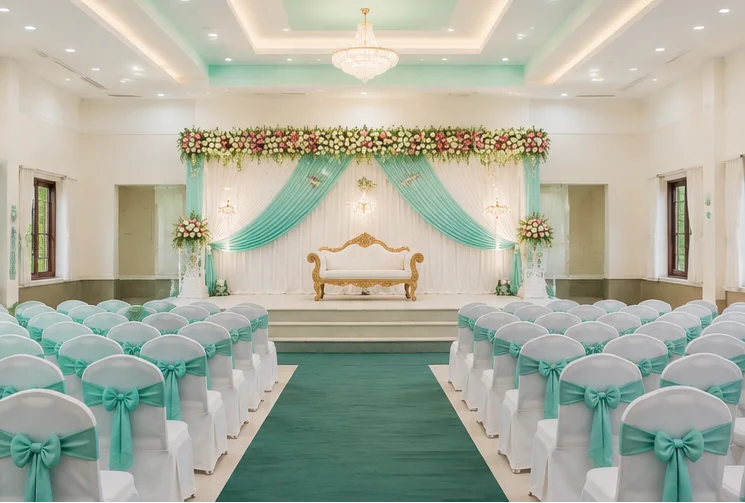
Poonool, also known as Upanayanam or the Sacred Thread Ceremony, is an important traditional function observed by many families as a meaningful spiritual and cultural milestone.
The occasion often brings together parents, grandparents, relatives, family elders, priests, and close family friends to participate in the ceremony, offer blessings, and celebrate the young boy’s entry into a new stage of traditional learning and responsibility.
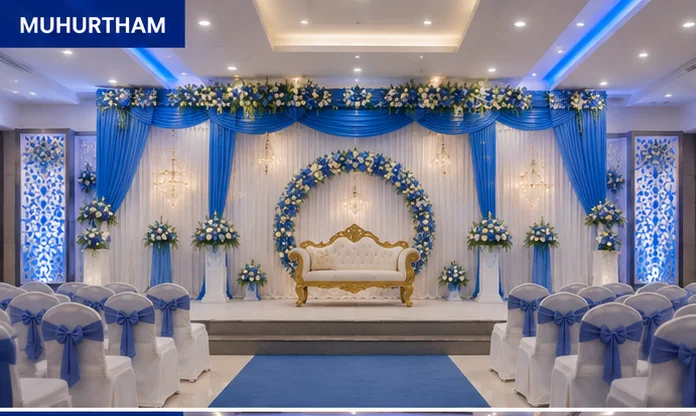
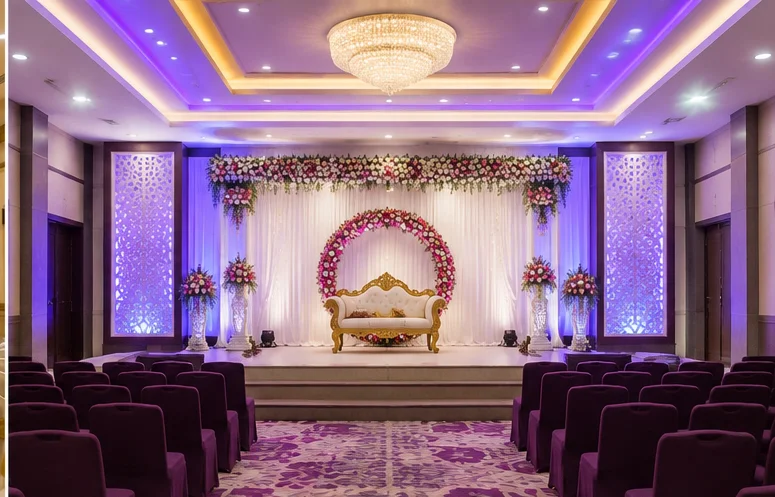
Located on Medavakkam Main Road, Keelkattalai, Sorna Mahal offers a spacious, centrally air-conditioned Poonool / Upanayanam Hall in Chennai where families can conduct the function in a comfortable, organised, and respectful environment.
Whether you are planning a close-family Upanayanam or a larger Poonool function involving extended relatives and well-wishers, Sorna Mahal provides the space and facilities needed to organise the occasion smoothly.
Upanayanam may be conducted differently according to family tradition, community, religious practice, and guidance from the priest or elders.
The programme may include:
Because customs vary, Sorna Mahal does not prescribe one fixed ceremony sequence.
Families should follow the traditions and religious guidance appropriate to them, while Sorna Mahal provides the venue and facilities needed for the function.
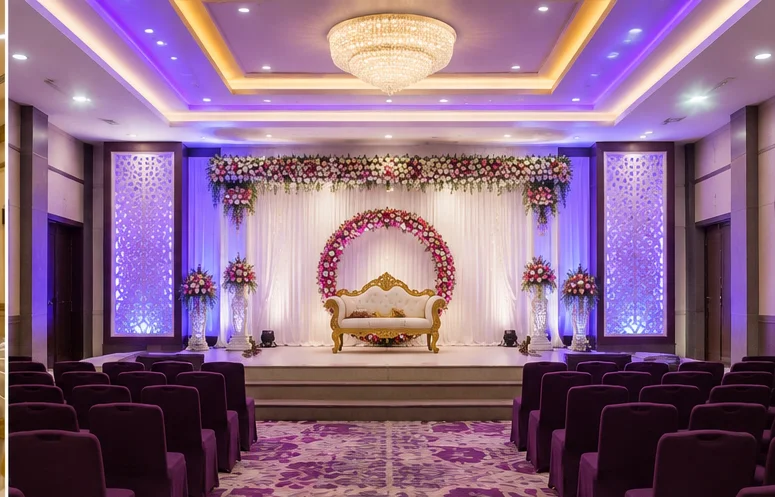
One of the advantages of Sorna Mahal is its strategic location on Medavakkam Main Road in Keelkattalai.
Guests can easily reach our venue through major roads and public transportation.
A successful Upanayanam does not depend on elaborate decoration or a long programme.
The priorities should remain:
Tradition
Ritual Clarity
Family Participation
Respect
Comfort
Blessings
Dining
Memories
A well-organised venue allows the family to concentrate on the ceremony rather than logistics.
If you are looking for a Poonool / Upanayanam Hall in Keelkattalai, Chennai, visit Sorna Mahal and discuss your requirements.
Share:
An Upanayanam may require more coordination than many other family functions because several elements need to come together:
Starting early gives the family enough time to coordinate these requirements without unnecessary last-minute pressure.
Begin with the most important decisions.
Consult the priest/family elders regarding the date and timing
Identify suitable dates
Confirm priest availability
Estimate the number of guests
Decide an approximate budget
Shortlist suitable Upanayanam halls
Visit Sorna Mahal
Check preferred date and slot availability
Discuss any special ritual setup requirements
Understand booking conditions
Confirm the venue according to the booking procedure
If relatives need to travel from outside Chennai, inform them once the date is confirmed.
Begin organising the major arrangements.
Ceremony Planning
Discuss with the priest:
● Approximate ceremony start time
● Expected duration
● Ritual-space requirements
● Parent participation
● Required traditional items
● Any specific setup requirements
● Dining timing considerations
Vendors
Depending on your requirements, finalise:
● Caterer
● Decorator
● Photographer
● Videographer, if required
● Other required services
Guest Planning
Prepare the initial guest list and identify important relatives who should be present for the ceremony.
Finalise the next level of details.
• Invitations
• Traditional attire
• Ceremony items
• Stage/ritual-area setup
• Decoration
• Photographer
• Videographer, if required
• Catering menu
• Gifts
• Return gifts, if planned
• Rooms
• Outstation family arrangements
If the function follows a specific early-morning or auspicious timing, communicate it clearly to all vendors and close relatives.
Reconfirm:
● Priest
● Ceremony timing
● Guest estimate
● Traditional items
● Ritual setup
● Family participants
● Boy's attire
● Parent attire
● Decoration
● Caterer
● Photographer
● Rooms
● Dining timing
● Important relatives
Assign responsibilities to family members rather than expecting one person to manage the entire function.
Confirm all major arrangements.
• Sorna Mahal booking details
• Date and slot
• Priest
• Ceremony timing
• Decorator
• Caterer
• Photographer
• Videographer
• Traditional items
• Boy's attire
• Parents' attire
• Gifts
• Return gifts
• Rooms
• Family participants
• Outstation relatives
One family member can act as the primary coordinator with the venue and vendors.
Prepare everything that can be organised in advance.
Check:
● Traditional attire
● Additional clothing
● Accessories
● Ceremony items
● Gifts
● Return gifts
● Personal belongings
● Vendor contacts
● Priest contact
● Venue timing
● Decoration timing
● Catering timing
● Photographer arrival
● Family arrival time
Avoid leaving essential purchases until the morning of the ceremony
The priest should guide the religious aspects of the ceremony.
Discuss:
• Date
• Auspicious timing
• Expected ceremony duration
• Required ritual space
• Seating arrangement
• Required traditional items
• Family participants
• Parent participation
• Boy's preparation
• Attire requirements
• Any fire/homam requirement
• Meal timing considerations
• Other ceremony-specific requirements
Do not rely on a generic online checklist for religious requirements.
The family's priest should provide the final ritual list
From the venue-planning perspective, check:
• Required floor space
• Priest seating
• Boy's position
• Parent seating
• Traditional items area
• Side table/trays where required
• Family participation space
• Guest visibility
• Clear access
• Photographer position
• Gifts kept away from ritual area
• Walkways kept clear
Decoration should be planned around this layout.
Because requirements differ, create a separate list directly from the priest's instructions.
A practical organisation system is:
Required at Start
Required During Ceremony
Required Later
Clothing / Accessories
Offerings / Other Items
Pack them separately and label them where useful.
Assign one responsible family member to manage them.
This is much safer than keeping all ceremonial items mixed together.
If the ceremony includes a homam or another ritual involving flame, discuss it with Sorna Mahal before the function.
Confirm:
• Whether the proposed setup is permitted
• Approved location
• Required protective arrangements
• Ventilation considerations
• Venue safety requirements
• Setup and removal procedure
The priest can advise on religious requirements, while the venue should confirm what can safely and operationally be accommodated.
Prepare:
• Main traditional attire
• Additional attire where required
• Change of clothes
• Accessories
• Towels/cloth items as required
• Personal essentials
• Footwear
• Water/refreshments at appropriate times
• Private preparation room
Keep all items together in one clearly identified bag or room.
The ceremony may require him to remain seated or participate for an extended period.
Where the ceremony permits, plan for:
• Adequate rest beforehand
• Minimal unnecessary waiting
• Comfortable preparation
• Easy room access
• Appropriate food/water timing
• Limited repeated photography
The religious schedule should follow the family's guidance, but avoid adding unnecessary delays around it.
Parents may have substantial ceremonial participation.
Prepare:
• Required traditional attire
• Accessories
• Ceremony requirements understood
• Seating position understood
• Approximate sequence understood
• Personal belongings organised
• Important items prepared
• Arrival time planned
Knowing what to expect reduces confusion once the ceremony begins.
Grandparents and elders may be particularly important participants.
Plan:
• Reserved seating
• Seating near ceremonial area
• Clear walkways
• Lift access
• Minimal unnecessary walking
• Comfortable dining
• Family assistance
• Important photographs taken early
If great-grandparents or very elderly relatives attend, prioritise their comfort and photography.
Depending on the family's tradition:
• Parents
• Grandparents
• Siblings
• Maternal relatives
• Paternal relatives
• Aunts and uncles
• Family elders
• Other close relatives
If many people need to participate, identify the required sequence beforehand.
Ceremonial backdrop
• Floral decoration
• Traditional elements
• Entrance decoration
• Welcome board
• Lamps/decorative elements where appropriate
• Photography area
• Gift table
• Dining entrance signage if required
Decoration should never reduce the space needed for the ceremony.
Prepare:
• Dedicated gift area
• Trusted family member assigned
• Valuable gifts handled separately
• Cash envelopes secured
• Gift packages organised
• Return gifts prepared, if planned
• Distribution responsibility assigned
• Final gift check before departure
Keep gifts away from the active ritual area.
• Boy in traditional attire
• Boy with parents
• Boy with grandparents
• Boy with siblings
• Boy with maternal grandparents
• Boy with paternal grandparents
• Boy with aunts and uncles
• Boy with cousins
• Maternal family
• Paternal family
• Multi-generation family
• Entire family group
Where appropriate:
• Venue and decoration
• Preparation
• Important ritual moments
• Parent participation
• Grandparent blessings
• Gift presentation
• Candid family moments
• Dining arrangements
Discuss with the photographer:
• Ceremony takes priority over photography
• Priest's working space remains clear
• Photographer's position agreed
• Flash restrictions understood where applicable
• Important moments identified beforehand
• Guests should not crowd the ritual area for mobile photos
• Formal photographs scheduled at suitable times
This helps preserve the dignity and flow of the ceremony.
Caterer confirmed
• Menu finalised
• Guest count communicated
• Breakfast/lunch/dinner decided
• Dining timing coordinated with ceremony
• Sweets planned
• Refreshments considered
• Children's needs considered
• Senior guests considered
• Any family-specific dietary requirements discussed
• Dining flow planned
Where ritual-specific food requirements exist, confirm them with the priest/family and caterer.
Send guests:
• Sorna Mahal name
• Full address
• Google Maps location
• Function date
• Ceremony start time
• Recommended arrival time
• Approximate completion time
• Family contact number
• Room information where applicable
For an early-morning ceremony, this information becomes especially important.
Booking your venue early gives you more flexibility when coordinating decorations, caterers, photographers, and entertainment. Early planning reduces last-minute stress and ensures a smooth celebration.
Yes. Sorna Mahal provides a centrally air-conditioned hall, ceremonial space, private rooms, dedicated dining facilities, lift, parking, and other facilities suitable for traditional family functions such as Upanayanam.
Specific ritual requirements should be discussed before booking
The hall comfortably accommodates approximately 300 to 330 guests.
Yes. The venue is centrally air-conditioned to provide a comfortable environment throughout the wedding ceremony.
Families can discuss their ritual-space requirements with the booking team in advance.
Where special arrangements are required, they should be reviewed before finalising the setup.
Yes. Families may work with their preferred decorators while following the venue's operational guidelines
Yes. Sorna Mahal includes dedicated dining facilities suitable for wedding functions.
Yes. Parking is available for both cars and two-wheelers.
Certainly. Families are encouraged to schedule a venue visit, explore the facilities, and discuss their wedding requirements before confirming their booking.
If your ceremony includes a homam or another flame-based ritual, discuss the exact requirement with Sorna Mahal beforehand.
The proposed arrangement must comply with the venue's applicable operational and safety requirements
Do not state that a priest is provided unless this becomes an actual Sorna Mahal service.
For the website, the safer wording is:
Families can arrange their priest according to their own tradition and ceremonial requirements
Air-conditioned rooms are available and can be useful for preparation, attire changes, rest, and keeping personal belongings.
Confirm availability and applicable charges while enquiring.
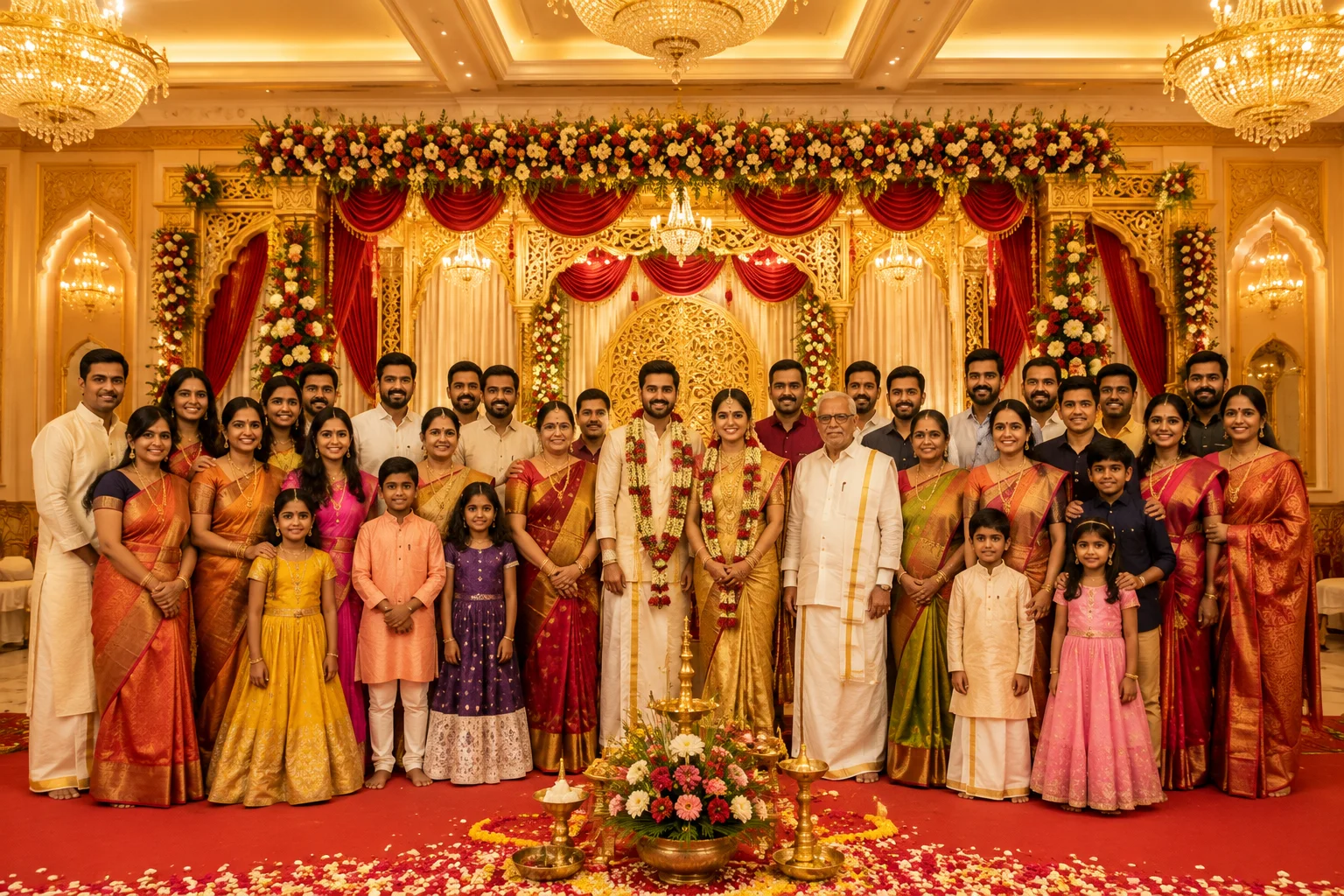
An Upanayanam brings together more than the people directly participating in the ceremony. It can bring several generations of a family into the same space: A young boy beginning an important traditional milestone. Parents participating beside him. Grandparents offering their blessings. Family elders witnessing traditions being carried forward. Brothers, sisters, cousins, aunts and uncles sharing the occasion. Years later, the photographs and memories can become an important part of the family's history.